How Do I Know God Loves Me?: His Discipline & Correction

“But you have forgotten that the Scriptures say to God’s children, “When the Lord punishes you, don’t make light of it, and when he corrects you, don’t be discouraged. The Lord corrects the people he loves and disciplines those he calls his own.” Hebrews‬ ‭12‬:‭5‬-‭6‬ ‭

As humans, it is easy to view moments of discipline or receiving correction as something harsh, negative, and sometimes unnecessary. However, when it comes to our relationship with God, Our Father, discipline is a clear sign of His love for us. The Bible tells us that the Lord will discipline those He loves. This means that even in our moments of loss, confusion, struggle, and disobedience, He is still lovingly guiding us and walking us toward righteousness.

It’s essential to understand and simultaneously challenging to think that God loved us before we knew Him, and for some before they even wanted to know Him, even when we were sinners. This revelation is eye-opening and makes His love for us even more transformative. We must take heart and turn from our sinful ways, for He is always ready to welcome us back into His loving arms.

Every day, God shows us new things and areas where we need Him to change us. We must receive His discipline with humility and gratitude, knowing He only wants what is best for us. Trusting His love and perfect plan for our lives is the key to overcoming life’s challenges.

The writer of Hebrews reminds us to endure hardship as discipline because God is treating us as His children. Just as a loving father disciplines his children, our Heavenly Father disciplines us because He loves us.

We can also find hope that God demonstrated His love for us when Christ died for us while we were still sinners (Romans 5:8). This act of love shows us that no matter what we do, God’s love for us is unrelenting and unfailing.

Therefore, we must trust in the Lord with all our hearts and lean not on our understanding. We must submit to Him in all our ways, and He will make our paths straight (Proverbs 3:5-6).

We must embrace God’s discipline as a sign of His love for us. We must turn from our sinful ways and trust in His perfect plan. Remember, God loves you, and He wants what is best for you. Trust in Him, and He will guide you towards righteousness.

God Wants to Provide for You. He Wants to Do It Today!

Photo by Pixabay on Pexels.com

This life is filled with things to keep us worried, fearful, and uncertain. Some have struggled to make ends meet, some don’t know where their next meal will come from, and so many more things can plague the life of a believer. I am here to share some wonderful news with you, God is a provider, and when he wants to provide for us, his children.

You might be wondering why God wants to provide for you. He already has everything that He needs, and so it seems like there’s no point in Him giving more of Himself to us. But when we trust in Him, He will give us everything that we need—and more!

In fact, every time you receive something from God (including provision), it is through His promise of a future gift. In Matthew 6:33-34, Jesus says: “But seek first the Kingdom of God and His righteousness, and all these things shall be added unto you.” That is exactly what He promises here: We can have our needs met by simply trusting Him enough to let go of any preconceived ideas about how much or how little we deserve certain blessings (like food). What’s amazing is God takes our needs, and our wants into account for this scripture. If we surrender and dedicate ourselves to doing what he has called us to do in each moment, he is willing to provide for our needs and our wants, to highlight his goodness and glory to those who follow him.

As you learn to trust God’s provision, you will find that He is always in control and always provides for us. He provides for us in ways we cannot see, but His provision is perfect because He loves us!

God knows what we need before we ask Him for it. When we ask Him for something, it will be provided according to His timing (1 Corinthians 1:9).

God is with us at every moment of our lives, even when we don’t realize it. When you are feeling down or stressed out, remember that God is there with you in your time of need!

He is faithful and trustworthy, just like Jesus was: “For I am about to come quickly” (Rev 22:18).

In the end, we’re all looking for a reason to feel good about ourselves. We want to be grateful for what we have and find ways to make our lives easier so we can focus on other things. The truth is that God does promise us many things, including peace and security for our hearts and minds. Don’t let the worries and anxieties of this life pull you down and smother you in a shield of depression and pain. Trust God to provide everything you need, and those promises are not just about the future—they are also meant for right now! If you are willing to believe in them when times get tough, then God will never let you down; He will always provide what it takes when it matters most.

Misconceptions of Worship: Worship is Just Singing

Photo by Luis Quintero on Pexels.com

Today, a major mindset held by a significant number of Christians centers around the idea that worship is primarily an exercise in singing songs or hymns to God. Singing songs and hymns highlights a form of worship. It isn’t the ONLY way of worshipping.

The Bible and its view of worship are much more expansive than just singing. This is important because even today, we center our Churches around the misconception that worshipping is only in the form of singing. We have created positions like Worship Pastors, Worship Leaders, Worship teams, and even worship bands, all of which play an integral role in one specific facet of worship. Still, it doesn’t encompass the totality of what worship is. This entry is not meant to offend anyone but serves as a message of encouragement.

In addition to our favorite worship playlists, worship bands, Sunday Setlists, let us also learn how to implement other ways to worship our LORD in our daily lives. I don’t particularly appreciate presenting problems without solutions or questions without searching out answers, so I have compiled just a few different ways of worshipping in everyday life. These are of extreme importance because there will be moments wherein, all honesty, you may not feel like singing, may not know a song. While I do recommend getting out of your comfort zone in these moments and still opening your heart to God, I also realize that Satan knows there’s power in worshipping our Creator, so if he tries to limit ways in which we do that, then he tries to gain a foothold over various areas of our life.

Different forms of Worship

  1. Joyful Songs: Psalms 100:1-2; James 5:13; Colossians 3:16
  2. Dance: 1 Samuel 6:12-14; Exodus 15:20-21
  3. Cheerfully Helping Others: 2 Corinthians 9:7; 2 Corinthians 8:1-2; Acts 2:44-45
  4. Prayer: Matthew 6:9-13
  5. Meditation: Psalms 19:14; Joshua 1:8; Genesis 24:63
  6. Operating in the Holy Spirit’s Gifitng: 1 Corinthians 12:1-7
  7. Be a living Sacrifice: Romans 12:1

These are just a few ways of bowing and serving God as worship. My prayer is that this opens your eyes and expands your toolbox for warfare against the enemy while also assisting you in deepening your intimacy with God.

Father, thank you for allowing us to serve you in so many different ways and not just one way. Teach us to worship you in every moment in whatever way you place on our hearts. You indeed are magnificent and wonderous. Our High Priest, our sovereign King, you are great. Amen.

What Is Worship?

Photo by Luis Quintero on Pexels.com

“To my mind there are very few words that we have watered down that have hurt us more than the way we have watered down worship after such a manner.”

Worship: A scheduled section of a church service in which songs are sung before and after a sermon.

This clearly is not the true definition of worship, but when we say worship, I could guarantee that most minds shift to a song, artist, group, or service section as the mental representation of worship. Meaning even though we know the definition above isn’t necessarily true, it’s still the cognitive definition many Christian minds shift to at the mere mention of the word.

The Bible uses a few different words for “worship.” The first word we will go over that is translated as worship is the Hebrew word, “שָׁחָה” pronounced, “shachah.” This word can be found approximately 170x across the scriptures, and what it means is, “worship, bow down, fall down, crouch, to stoop low.” This is a very significant definition and possibly the foundation of a true heart of worship. I think the beauty of this definition is that it actually highlights a physical posture. Our worship should always be a posture of bowing down to our King, this posture of bowing down can be a literal position or an extended position of the heart and intentions.

Another word is linked to “worship,” more specifically, “worshippers.” This Hebrew word is, “עָבַד” pronounced, “avad” is a word that is mentioned nearly 300x. As a person studying Biblical Hebrew, It would be detrimental for me, not to mention an essential point. This word is most commonly translated as serve/to serve (227x) compared to it being translated as “worshipper” only 5x, which is comparably less than the word serve. This is important because I want to stay true to the text and not add any theological implications for a word that only appears a handful of times and uses a different word much more. However, I will continue to explain this because I don’t think the two words are mutually exclusive. I believe a key part of being a worshipper is serving and being a servant. To connect it to the last word, “shachah,” servants often take the posture of bowing down and stooping low.

As we lay a foundation for exploring worship, these two words help us understand more of what worship looks like in whatever we do. Simply put, worship has to be an act in which we bow down, stooping low ready, and willing to serve our God. Whether in song and dance or in our actions and lifestyle, all the forms of worship God has blessed us with must always start with a humble servant ready to honor our Lord.

How Do We Worship?

Photo by Chad Kirchoff on Pexels.com

“The purpose of this Christian society called “the church” is first to glorify God by our worship. We do not go to church just to hear a sermon. We go to church to worship God.” 

Billy Graham

The typical Church observance day can go a few different ways. Either on a Saturday or Sunday, you wake up, prepare yourself for church, arrive at church, engage in conversations in the lobby, maybe grab some coffee and donuts, enter the sanctuary. In many denominations, a group of musicians and singers will go on stage, or to the front of the church, some places the lights may dim, and it marks the beginning of a 20-30 minute session of what we have called “Praise & Worship.”

I recognize that many denominations do things differently and approach worship differently; this is a broad generalization of the different sects of churches I have visited. However, I would like to draw attention to that portion of the service that your church may call worship. Take a few moments and ponder on that thought. What does worship at your church look like? How long does it last? How do you engage with this section of service? How do others engage?

The post is entitled, “How Do We Worship?” when studying and praying and writing this, I was fully aware that this entry would not answer that question, but I wanted it to serve as a means to get us thinking about how we have approached worship as a Church.

This initial writing will begin a study about the true heart of worship. Is it singing songs? Is it about instruments? Is there a set amount of time it should go on? These are just a few questions many ask about worship, so unfolding from this study, we will learn a variety of things about worship. So that we may honor God by implementing the way Jesus, our Savior, calls us to worship.

“God is spirit, and his worshipers must worship in the Spirit and in truth.”

John 4:24

The Importance of the Church

Photo by Adrien Olichon on Pexels.com

“What matters in the Church is not religion but the form of Christ, and its taking form amidst a band of men”

Dietrich Bonhoeffer

Christianity worldwide has about 2 billion people that consider themselves “Christians.” That 2 billion is then divided up between 45,000 denominations that span the globe entirely. The “church” makes over 50 billion dollars a year worldwide. These are just a few of the facts that the world knows about the “church.” However, the focus of this article is not on the church business, church organization, or any aspect of what we most commonly think of as “church” in the modern context. The Church I want to talk about is the Church that Jesus and the New Testament writers speak about.

“Daily they met together in the temple courts and in one another’s homes to celebrate communion. They shared meals together with joyful hearts and tender humility. They were continually filled with praises to God, enjoying the favor of all people. And The Lord kept adding to their number daily those who were coming to life”

Acts 2:46-47

The Church is an interesting concept and group, scripturally. The New Testament was written in Greek, and the Greek word we translate to Church is the word “ekklesia,” which means “the called-out ones.” It’s interesting because the Church is based on people being called out and chosen by Christ to live and renewed and transformed life. Not by a building with a trendy name and fashionable mercy. The Church is the body of people who are devoted to Christ and becomes Christs’ indwelling and worldwide temple where believers are to operate from his love and authority to provide for the needs of those around them in a way that glorifies Christ and not ourselves.

Many have turned against Christianity because of the years and history of what the “Church“ has become that has made it almost unrecognizable in some cases to what Christ set up as he physically departed from Earth. But my encouragement to you is to be shown that the Church is not a building; the buildings we have are simply meeting places to encourage other believers and disciples to go out and make a positive difference in the world by the way WE live our lives. The church’s building should be to facilitate all of the personal transformations to edify the community and, most importantly, glorify Christ.

1 Corinthians 6:19 tells us, “Do you not know that your bodies are temples of the Holy Spirit, who is in you, whom you have received from God? You are not your own.” As the blog post is named “The Importance of the Church,” Christ made us all individually unique with different skill sets and talents as little personal churches to transform environments and lives around us through the power of the Holy Spirit. Our lives are the living sermons; our lives are living worship songs; our generosity is our tithes and offerings to Christ. Christ made you a temple that he lives in to reach people that (insert church name here) won’t be able to reach. So embrace that and be thankful for that. That’s why the Church is important.

Dear Father, thank you for choosing me! You chose me! You chose us to move forward with your kingdom agenda. Through all of my faults and imperfections, you died and rose again so that I may be a reflection of you to those I come around and the environments I enter. This day I pray that your Holy Spirit molds me into the person you need to show what a true and effective Church is. The complete submission and gathering of your people to spread the Kingdom’s message. I pray this in Your Holy Name. Amen.

Effective Communication = Successful Relationships

“Death and Life are in the power of the tongue; those who love it will eat its fruit.”

Proverbs 18:21
Photo by fauxels on Pexels.com

This is a reasonably well-known scripture and I’ve heard many sermons about it, I’ve seen many books about it, and at the very least it’s a scripture teaching us to be wise about what we say. However, I think we tend to over-spiritualize this scripture (please don’t misunderstand when I say this). There is definitely a spiritual connotation and takeaway. Still, at the very basis of this Proverb and multiple times through the chapter and book as a complete work, Solomon is simply talking about communicating. King Solomon knew the importance of proper communication. Solomon bore the responsibility of becoming King at the tender age of 12.

The duties of a biblical king ranged from the devout study of God’s word, complete observance of the commandments and laws. They were to defend their nation when necessary while also engaging with surrounding countries for various reasons. With this being said, King Solomon was expected and required to have effective communication to be as effective and as wealthy of a leader as he was when leading Israel (1 Kings 10:14-29). Communication has many benefits when done correctly and it also can have tremendous downsides when done incorrectly. So, in a very practical sense Proverbs, 18:21 is hinting at this when it says life and death are in the power of the tongue. How many times have we cultivated relationships by having good, clear, honest conversations? How many times have we been placed in better situations or circumstances because of productive communication? On the contrary, how many fights and hurt feelings have happened due to poor communication? How much stress have we put on ourselves when someone communicates poorly with us? The scriptures point to the fruit of productive communication as well as the fruit of poor communication.

Effective Communication impacts all areas of our lives, such as work-life, relationships, parenting, finances, and many more. We as humans have a mandate to be proper and effective in communication because we are made in the Image of God and he is the master communicator. He knows how to speak and interact with all of us in our own unique ways without being overbearing and pushy. Today, I pray we recognize how to effectively communicate and follow the advice of Solomon when it comes to the words we speak.

Dear Creator, You created this universe, this world, by speaking. You gave your commands by speaking; you did miracles by speaking. Your word is a story about how you have communicated with humanity to spread your word and your love. Teach us to communicate in the way you do to be an effective steward of the gift of speaking. In all of our words, they are meaningful, honest, filled with your love, and edifying no matter the topic. Let it glorify you. Help us to be Godly Communicators. Amen.

Recommended Scriptures:

Proverbs 18:21

Ephesians 4:29

Psalms 141:3

Proverbs 18:13

Proverbs 21:23

Wages?…Wages of Sin? Death?

Photo by Monstera on Pexels.com

“For the wages of sin is death, but the gift of God is eternal life through Jesus Christ our Lord.”

Romans 6:23

According to Merriam-Webster, the definition of wage is “a payment usually of money for labor or services usually according to contract and on an hourly, daily, or piecework basis —often used in plural.” The word wage used in this scripture is the Greek word, “opsōnion,” which is a military term used to speak on payment that a soldier would receive for his services, which typically wasn’t much with some occurrences of the word simply meaning an allowance, stipend, and even a ration of food. So, what exactly does Romans 6:23 mean? That sin gives you a paycheck of death. Well, this teaches us that not only does sin compensates us terribly, but that compensation is ultimately death. A practical way that helped me to understand this scripture is an analogy to credit card debt. Sinning is like maxing out a credit card while having no realistic way of paying off that debt while constantly still bearing the shame of having that debt looming over your head.

However, just as the last part of Romans 6:23 says, “…but the gift of God is eternal life through Jesus Christ our Lord.” Jesus offers us a way out. Just as the word wages is a blatant financial term used when discussing money or finances, so is the word forgiveness. In Greek, the word forgiveness is, “aphiēmi” which means to literally clear out, send away, no longer keep, and neglect. The example I used earlier about sin being compared to maxing out a credit card with no realistic way to pay it off is the default spiritual condition all of humanity is faced with. However, turning our lives to and FULLY submitting to Christ as our Lord means he can come in and not only wipe that debt clean, we also can inherit his riches and treasures. Which we learn in Romans 6:23 is eternal life. Still, also Ephesians 1:11-23 expands even more upon this idea of what we inherit.

So, we learned that sinning puts us in a situation where its payment is unsubstantial and leads to death. But a life surrendered to Christ not only frees you from the debt and the wages of sin, but it also gives you the gift of partaking in eternal life and being able to claim the inheritance God has stored up for his true and faithful servants. I am not an accountant, a banker, or a professional investor, but I can confidently say I know what option I choose. I hope you do as well!

Dear Lord, our savior, our redeemer, our forgiver. The one who wipes all our debt and our shame away. The one who allows us to share in his inheritance and his riches. Thank You for freeing me of sin and helping me want to live a life that moves closer and closer towards you. I pray for those who are lost and trapped in a lifestyle that shows the wages of sin that lead to death and that they too are made aware of the best debt forgiveness program that gives them spiritual freedom and that they also take part in the inheritance you have for them. I pray this in your name, Jesus Christ. Amen.

Why God Gives Commands

Photo by Joshimer Biu00f1as on Pexels.com

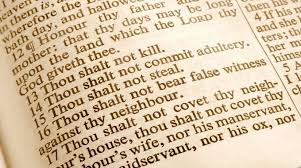
“The Bible is just an old book written a long time ago full of rules and no modern cultural relevance.” Many of those who object to scripture and even some believers believe that The Bible, especially the Hebrew Bible/Old Testament, is overflowing with commands, regulations, and laws. These commands and laws also became roots of self-righteous hypocrisy that we see in the Pharisees and Sadducees. However, this was not God’s purpose for the commands. The commands in the Hebrew Bible are to direct us to a way of life that leads to holiness. In the New, Testament Jesus comes to fulfill that so that our deeds don’t make us holy. Still, Christ’s death and resurrection make us right with God that way, and our transformation of heart and mind encourages us to live a lifestyle of holiness and follow God’s commands due to Christ’s sacrifice.

When a nation establishes laws or commands, those laws highlight what that nation values. For instance, America has a Constitution, and our Constitution is home to amendments. Our first amendment gives us a list of guaranteed freedoms. Freedom of religion, expression, assembly, and right to petition. This shows us that our founding fathers valued and cared that the citizens of this nation were allowed to express their individuality while also being allowed to question their government. While this is merely an analogy, God’s commands are very similar; his commands show us more about his personality, values, and cares.

For Example:

  1. No other gods other than God- God cares that we are in a devout relationship with him only and undivided.
  2. No Idols, only worship God- God values that we show all our affection and love to him and him only.
  3. Do not disrespect God’s Name- God values his name and how it is used. His name highlights his character, so if it’s scorned, it can misrepresent his nature.
  4. Keep The Sabbath Day and Make it Holy- God values your rest and time off to spend time with Him and has uninterrupted time with those you love.
  5. Honor Your Parents- God cares about and values you, but he also loves your parents. We are all his children, and he values us all.
  6. You Shall Not Murder- God cares and values life. He loves your life. He values our lives.
  7. Honor Your Marriage Promises- God values our relationships and cares about our faithfulness and relational growth.
  8. Do Not Steal- God values the possessions we’ve earned, and an extended meaning is God made us stewards, so ultimately, it’s all his stuff, and he loves his things.
  9. Do Not Lie- God values and cares about Truth. No questions asked.
  10. Do Not Be Jealous or Envious of Others and their Things- God values our view of ourselves and others. Jealousy and envy show that we aren’t content with the things we have. God wants us to be grateful.

You can find the 10 commandments in Exodus 20:2-17 or Deuteronomy 5:6-21, and the Bible is full of many other commands as well. When you read these commands, don’t just see them as rules or regulations but the revelation of what God cares about and values, and why!

Dear Father, Thank you for your commandments, for they guide me, and they reveal your heart and cares for your creation. As I read these commandments throughout your Word allow me to see your heart and extend that grace and truth in everything I do for your glory. In the name of Jesus. Amen.

Design a site like this with WordPress.com
Get started